Launceston sits on a mix of Tertiary basalts and Quaternary alluvial deposits along the Tamar River valley, creating highly variable groundwater conditions. The water table can be shallow in the low-lying suburbs (like Invermay) and deep in the basalt caps of West Launceston. For any excavation below the water table, understanding permeability is critical. Our field permeability test (Lefranc/Lugeon) directly measures hydraulic conductivity in situ, avoiding the errors of lab tests on disturbed samples. We recommend pairing this with a soil classification study to correlate permeability with grain size across different strata.
A constant-head Lefranc test in Launceston alluvium can reveal permeabilities 10 times higher than lab tests predict, avoiding costly dewatering surprises.
Methodology and scope
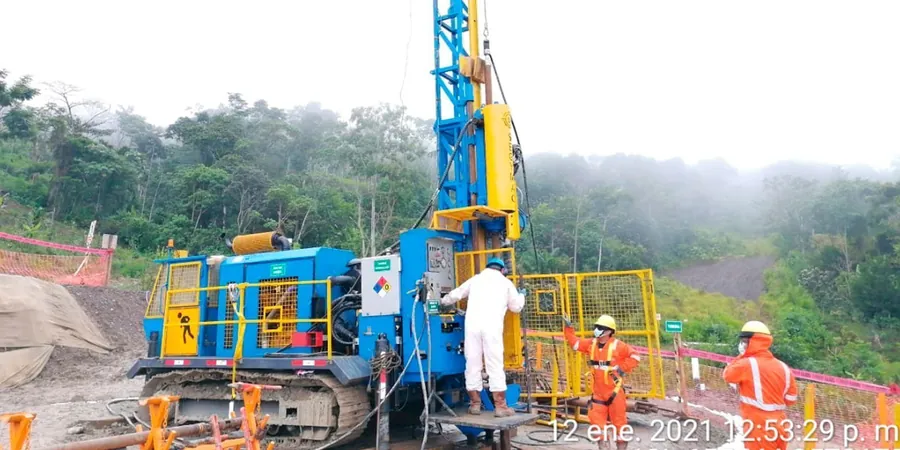
We follow AS 1726—the Australian standard for geotechnical site investigations—and apply the Lefranc method in permeable soils above the water table, switching to the Lugeon method in rock for dam and tunnel assessments. In Launceston's basalt formations, where jointing and weathering control flow, the Lugeon test is especially relevant. The test involves sealing a section of borehole with packers, injecting water under constant head, and measuring flow rate over time. Our equipment records pressure at 1-second intervals, giving a precise permeability curve. We use double packers to isolate specific horizons, so you get permeability values per meter rather than a bulk average.
Technical reference image — Launceston
Local considerations
A commercial development on Lindsay Street required a deep basement two meters below the water table. Without a field permeability test, the design assumed a seepage rate of 5 L/min. Our Lefranc test measured 42 L/min—nearly nine times higher. That single field test prevented a dewatering system undersized by a factor of four, saving the project from months of delays and retrofit costs. In Launceston's alluvial zones, skipping in-situ permeability testing is a gamble with both budget and schedule.
10⁻⁵ to 10⁻¹ cm/s (Lefranc); 10⁻⁷ to 10⁻² cm/s (Lugeon)
Borehole diameter
76 to 146 mm (HQ to NQ)
Test section length
0.5 to 3.0 m (variable via packer spacing)
Injection pressure
Up to 1.5 MPa (Lugeon); gravity head (Lefranc)
Data output
Permeability (k) in m/s, flow rate vs. time curves
Associated technical services
01
Lefranc constant-head test
For soils above the water table, we drill a cased borehole to the test depth and maintain a constant water level. Suitable for sands, silts, and weathered basalt where permeability is moderate to high.
02
Lugeon packer test
In rock or stiff clay, we inflate double packers to isolate a 1–3 m section. Water is injected at incremental pressures (0.5, 1.0, 1.5 MPa) to measure permeability and detect hydraulic fracturing or joint dilation.
03
Variable-head (falling/rising) test
Where the water table is near the surface (common in Launceston's low-lying areas), we measure the rate of water level recovery after a quick drawdown. Ideal for low-permeability soils like clayey silts.
04
Permeability profiling along borehole
We run multiple packer tests at 1 m intervals down the borehole, creating a continuous permeability log. Essential for foundation design on stratified alluvial deposits where thin clay lenses control flow.
Applicable standards
AS 1726-2017 Geotechnical site investigations, AS 4678-2002 Earth-retaining structures (permeability for drainage design), AS 1289 Standard test method for field measurement of hydraulic conductivity
Frequently asked questions
What is the difference between Lefranc and Lugeon tests?
The Lefranc test is used in soils above or below the water table using a constant or variable head. The Lugeon test is applied in rock (and sometimes stiff clay) using a packer and multiple pressure steps. Lugeon also reveals if the rock fractures under pressure, which is critical for dam or tunnel projects around Launceston.
How long does a field permeability test take in Launceston?
A single Lefranc test usually takes 1–2 hours including borehole preparation and data collection. A Lugeon test with three pressure steps takes 2–4 hours per test section. For a full profile of 5 sections, budget one full day on site.
Can I use laboratory permeability results instead of field tests?
Only with caution. Lab tests on undisturbed samples measure the permeability of the intact matrix but miss macropores, fissures, and layering that dominate flow in Launceston's basalts and alluvium. Field tests consistently show 5–20 times higher permeability than lab tests in these ground conditions.
What is the typical cost range for a field permeability test?
A standard Lefranc or Lugeon test at one depth ranges from AU$980 to AU$1,440, depending on borehole depth and site access. A full permeability profile with 5 test sections ranges from AU$2,900 to AU$4,500. We provide a fixed quote after reviewing the site conditions.
How do you handle artesian conditions during testing?
Artesian flows are common in Launceston's confined aquifers beneath the basalt. We install a pressure-rated packer assembly and measure the natural artesian head before starting the injection. The test is then conducted at pressures above the artesian head to ensure water flows into the formation rather than back up the borehole.